ServicesRoof Treatments
Moss and Algae Roof Treatments in Waterford, NY
Those black streaks and patches of green moss are alive, and they live off your shingles. Our low-pressure treatment kills algae, moss and lichen down to the root, and rain rinses the dead growth off over time. Nobody scrubs your roof or walks all over aging shingles.
What a Roof Treatment Does and When It Makes Sense
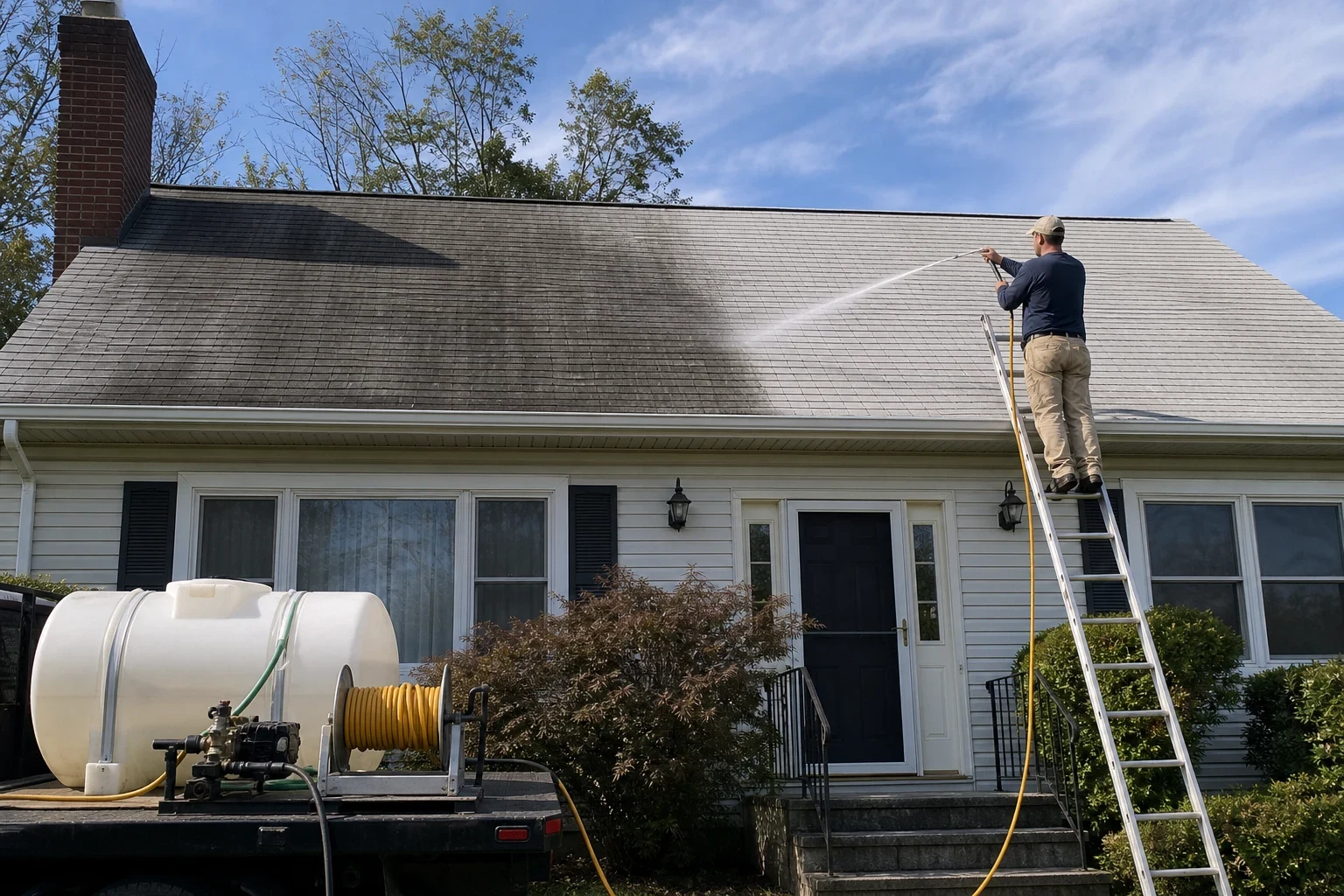
Those dark streaks running down a north-facing slope are usually Gloeocapsa magma, an algae that feeds on the limestone filler in asphalt shingles. Moss and lichen follow. Moss holds water against the shingle and lifts the edges, and lichen roots into the granule surface. Left alone, both speed up granule loss and shorten the life of the roof.
A roof treatment is a liquid applied at garden-hose pressure that soaks into the growth and kills it. Nothing is blasted off. Over the following weeks, rain and wind loosen the dead material and it washes away on its own. That matters on older houses, where shingles may be brittle, patched by a previous owner, or a layer over an earlier roof. Treating from a careful, low-pressure approach puts far less stress on that roofing than any scrubbing or foot traffic would.
What Your Roof Treatment Includes
A close look before we spray
We check shingle condition, past patches, flashing around chimneys and vents, and any soft spots. If we see damage that needs a roofer, we tell you and take photos so you can see it yourself.
Low-pressure application
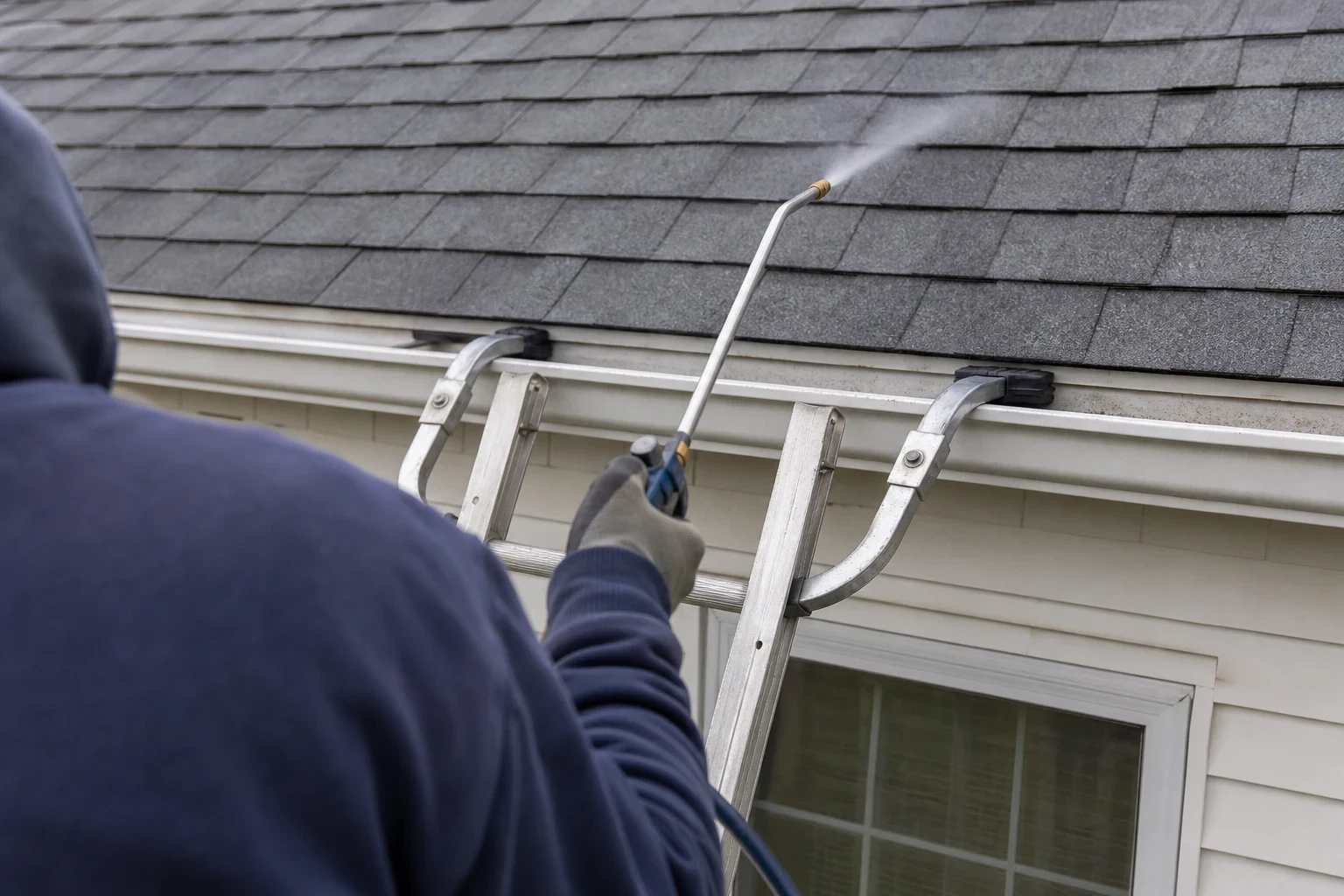
The treatment goes on at roughly garden-hose pressure. It coats the growth without driving water under shingle tabs or knocking loose the granules that protect the asphalt.
Moss, algae and lichen in one pass
Black streaking, green moss mats along the lower courses and the gray-green crust of lichen are all treated in the same visit. Heavy moss clumps may need a second application.
Protection for plants and fixtures
We wet down shrubs and beds before and after, cover sensitive plantings where needed, and keep overspray off siding, windows and any roofline lighting.
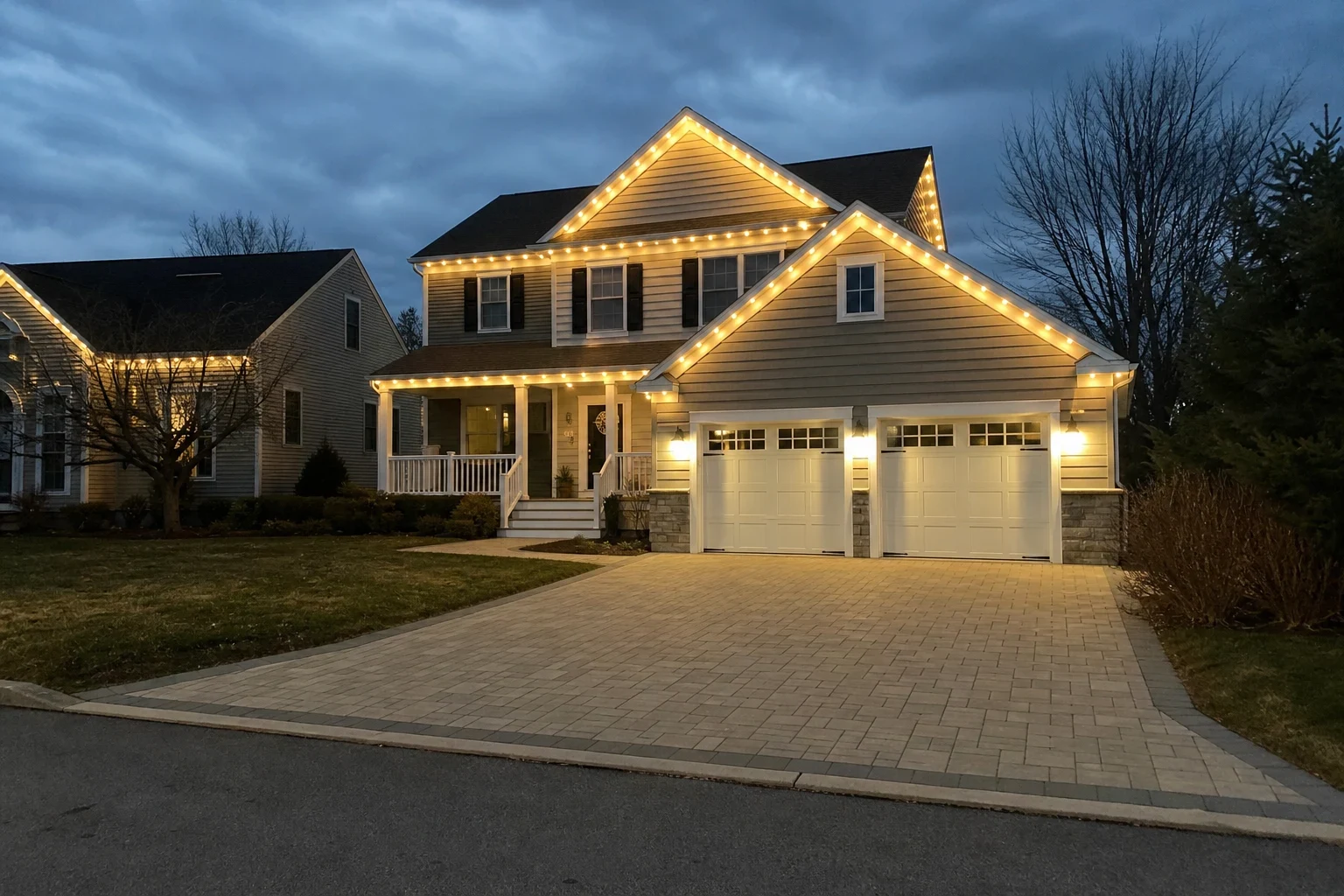
Care around permanent lighting
If you have permanent lighting along the eaves, we work around the track and connections so nothing is lifted, bent or soaked at the junctions.
Signs Your Roof Needs a Treatment
- Dark vertical streaks
- Black or brown streaks that start near the ridge and run downhill are algae colonies, not dirt. They spread each humid season.
- Moss along the lower edge
- Green cushions near the eaves and in shaded valleys trap moisture against the shingles. Over time they pry the tabs upward.
- Crusty spots that won't rinse off
- Lichen looks like flat gray or green coins stuck to the surface. Its roots grip the granules, so rain alone never removes it.
- Granules collecting at the downspouts
- A buildup of sandy granules below downspouts can mean growth is loosening the surface. Treating early slows that wear.
- One side always looks worse
- Slopes under trees or facing north stay damp longest. If one face of the roof is darker than the rest, that is growth, and it will keep moving.
How the Job Day Runs
- 1
Free quote by phone, then a walk-around
You tell us what you're seeing, and we look at the roof's pitch, height, material and how much growth is there. You get a clear price before any work is scheduled.
- 2
Prep the ground and the roofline
We pre-wet landscaping, cover delicate plants, and note downspout outlets, lighting channels and anything else near the drip edge that needs shielding.
- 3
Apply the treatment
We spray each slope from the ridge down, working evenly so streaked areas and clean areas both get covered. On steep or fragile older roofs we limit time spent on the surface.
- 4
Rinse plantings and let it work
We rinse shrubs again before we leave. Moss usually turns brown within days, while streaks fade over several weeks to a few months depending on rainfall.
What Moves the Price of a Roof Treatment
We price each roof after seeing it, because two houses with the same footprint can be very different jobs. Your quote is free and given by phone after the walk-around. These are the things that change it.
- Roof size and pitch
- More square footage takes more product and time. Steep pitches need extra safety setup and slower work.
- How much growth there is
- Light streaking takes one pass. Thick moss mats or heavy lichen may need a stronger mix or a follow-up application.
- Height and access
- A two-and-a-half-story house with dormers, or a roof hemmed in by trees and fences, takes longer to reach safely than a single-story ranch.
- Condition of older roofing
- Brittle shingles, multiple layers or old patches mean we work from ladders and the eaves more and walk the surface less, which adds time.
Common Questions About Roof Treatments
- Is the treatment safe on old, brittle shingles?
- It puts much less stress on a roof than scrubbing or pressure washing. We spray at low pressure and let the solution do the work, so the granules stay on the shingles. If your roofing is already worn out, we say so first, so you don't spend money treating a roof that is due for replacement.
- The streaks are still there after you left. Is that normal?
- Yes. The growth dies as soon as the treatment reaches it, but it stays on the roof until the weather wears it away. Moss turns brown within days. Black streaks lighten slowly, over a few weeks to a few months, depending on rainfall.
- Will my plants and pets be okay?
- We soak your landscaping before and after we spray and cover the more delicate plants, so any runoff stays weak. Pets should stay inside during the work and until the roof and garden beds are dry. We explain what to expect before we begin.
- Do you treat slate or cedar shake roofs?
- Slate and wood shakes are common on older homes, and we can treat either one with a modified approach. We check the roofing material first and give you a straight answer on whether treatment is a good fit.
- What about the permanent lights along my roofline?
- They stay as they are. We spray around the track, keep the spray off wire connections and controllers, and never tug on the channel to get at the shingles under it.
- How often does a roof need treating?
- That comes down to shade, nearby trees and how long each slope stays damp. A roof in full sun can go a long time between treatments, while a shaded north side grows back faster. When you see fresh streaks, we can come take another look.
Stop the Growth Before It Wears Down Your Shingles
Tell us what you're seeing on your roof and we'll come look, check the older repairs, and give you a clear price.